
Starlink V3: what the next generation means for internet capacity
Source event / publication: 2026-10-06 · Updated: November 24, 2026 · 2 min read (approx.)
SpaceX reports the first V3 satellites were deployed in late September 2026.
In this guide
What SpaceX reported
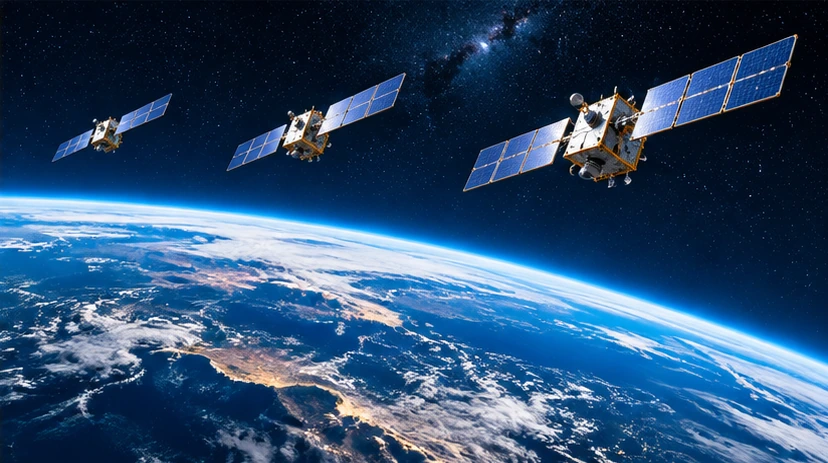
SpaceX’s October 6 update says its first 26 V3 satellites were deployed at the end of September. Its design page describes a substantially larger downlink and uplink capacity per spacecraft than V2. Those figures describe spacecraft capacity, not a household’s speed.
Why capacity matters
A satellite shares radio and network resources among users; extra capacity may help congestion if coverage, spectrum, gateways and terminals support it. The improvement a particular customer sees will depend on deployment and local demand.
Read our technology explainer and speed and latency guide.
Sources and further reading
Back to all news and research →
Reference guide · Updated November 24, 2026
Spacecraft capacity vs a home connection
Additional satellite capacity is divided among beams and users, and the rest of the network must be able to carry the traffic. Local spectrum, terminal capabilities, gateway resources, geography and demand still influence individual throughput. A change in advertised spacecraft capacity does not imply a proportional change in every customer's speed.
What would verify an improvement?
Repeated local measurements taken before and after deployment, with comparable hardware, service plan and test method, would be more meaningful than a single peak speed screenshot. Watch actual commissioning and independent research; do not treat a design claim as a service guarantee.
Evidence and further reading
- Mohan et al., A Multifaceted Look at Starlink Performance (2024) Independent research
Crowdsourced tests, application performance and controlled measurements of temporal variability.
- Benghe et al., Horizon: Understanding and Predicting Global Starlink Performance (2026) Independent research
Geographically diverse data and environmental features; prediction errors remain.
Sources are linked to original publishers or identified public records. Plan documents and specifications may change. See the research library for evidence types and limitations.